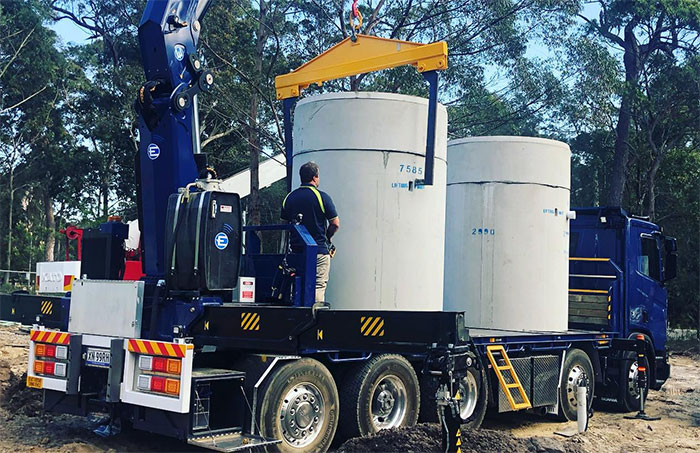
Factors to Consider When Choosing an Underground Water Tank

A careful and accurate selected water tank will supply potable and fresh water on hand. Investing in an underground water tank comes with tremendous benefits. The usage of your main water supply can be reduced up to 100% depending on the tank, which is great for your water bill, you can maintain a healthy green garden, even with water restrictions. Therefore, you can’t afford to select the wrong tank. Selecting the right cannot be overemphasised as it also ensures the safety of your drinking water. This article dwells comprehensively on the factors to keep in mind, when deciding the best choice of underground water storage either for residential or commercial use.


Construction

Contaminants are something you need to prevent by all means. Therefore, your underground water tank should be constructed such that you prevent pollutants from entering the tank. A well-constructed tank will prevent foreign substances. What you look out for when you make your purchase include corrosion resistance, screened air vents and rain protection. If you don’t have these features in your underground water tank, it means the tank can become tainted quickly.


Size

The size of the tank is another crucial factor to consider when choosing an underground water tank. You should also note that once the tank has been installed, it will be problematic for you to move it or replace it because of its size. The good thing is that there are a wide range of sizes of the tank. Some sizes can hold more than tens of thousands of gallons of water. You can get in touch with Sydney Water Tanks to help you determine the size of tank you will need.


Design

Watch out for the design of the underground water storage you want to buy. The design must match your needs. If you want a tank to supply drinkable water, go for one that is designed for that purpose. The simple fact that a tank serves the purpose of water storage does not mean that it is suitable for storing drinking water. Therefore, be sure that you are not purchasing a tank that is intended for irrigation or any other non-potable water sources. Doing this will help will also ensure the safety of everyone that will use the water coming from the tank.


We can Help You

At Sydney Water Tanks, we have different sizes of underground water tank for you. Whatever the needs or design requirements, we have got you covered. Contact us today to get started.

Saving Our Resources By Collecting Rainwater

Due to its generally hot and dry climate, fresh water is a valuable commodity in Australia. Especially those people, who do not live in high-density areas have limited access to mains water and rely on underground tanks as a primary source of water. Collecting rainwater for a wide range of purposes is very common and as our population grows, so does the pressure on water use. To ensure future water supply, we should use our resources more carefully and conserving rainwater even in areas with fresh, clean water supply will help reduce the need to build water storage dams.


Collected rainwater is also used to extinguish bush fires in Sydney and Canberra areas. The long-lasting tanks from 40mpa steel fibre reinforced concrete can be installed underground hence they will not be destroyed during a fire but help fight the flames.


When collected and stored in a well-maintained system, rainwater can be suitable for all domestic uses such as car washing, garden watering, laundry, bathing, toilet flushing, food preparation and even as a source of drinking water when treated. The general public opinion is that rainwater is safe to drink in most areas of Australia and the risk of getting sick from consumption is relatively low in places without heavy industry.


The growth of urban centres puts pressure on groundwater supplies not only in people’s homes but also on industrial use and food consumption. A problem that causes people across the nation to look for ways to save on mains water. The use of rainwater has become a major national strategy to enhance water conservation, and there has been a steady progression from rainwater tanks being installed even in urban areas as communities adjust to the reality of climate change followed by drought and water restriction. This is why also the Australian Government supports the installation of in-ground tanks reducing the pressure on groundwater resources due to the growing number of Australia’s citizens.


The size of residential tanks depends on the volume of water needed for the range of uses required, the amount of rainfall and the area of roof catchment. If the house is near an area where there is the danger of bushfires and water used to extinguish the flames, one should also take into account the security of supply required.


If you consider getting an in-ground tank to save not only on bills but also national water resources, get in contact with us. Our professional team at Sydney Water Tanks will explain in detail how to manage and use rainwater tanks and will assess your property conditions in terms of rainfall to find the right tank and storage size for you.


Read Also:

Harvesting Rainwater Made Easy With Underground Tanks

Harvesting Rainwater Made Easy With Underground Tanks

Collecting rainwater in an underground tank is one of the best methods to help protect national water resources. Harvesting rainwater from roofs to store it for later use such as irrigation, watering livestock, laundry or toilet flushing is an innovative technique. If a purification system is installed then rainwater can also be used for showering, in the kitchen and even for consumption use. Therefore, it is unnecessary to use mains water for another purpose than drinking and cooking when rainwater is available.


Due to the dry climate and little rainfall during the summer months, Australia is prone to droughts.


The demand for water increases with the population, and when water shortages begin to occur during the hot summer months, local water supplies experience quite a burden. An interruption in the water supply can lead to depleted gardens and even worse, the death of livestock and wild animals. To protect our groundwater supply and cut down on unnecessary usage drastically, the easiest way is by installing a rainwater tank on your residential property to store large volumes for later use.


Not only has water supply has shrunk over the years, but so has the size of backyards in many properties in larger cities. At Sydney Water Tanks we have created the solution for urban house blocks where yard space is limited and specialised in manufacturing concrete rainwater tanks, which can be installed underground, leaving you with more outdoor space saving you more room to entertain. Being able to provide large water storage room in the ground is something a lot of urban homeowners have welcomed over the past years especially by those who do not only want to cut down on water bills but lead a sustainable life. By installing your water tank in-ground, you do not have to sacrifice the already limited capacity on your property but can still build a deck, patio or pergola without giving up space. Our in-ground water tanks ensure efficient storage and maximum rainwater collection for multiple uses. To ensure your household benefits from harvested rainwater to its fullest potential, our tanks come with a Rain Switch that automatically makes use of the collected water when available.


If you are interested in learning more about the benefits of rainwater collection, contact Sydney Water Tanks directly and find out about our innovative underground water tanks and their maintenance. We will help you to find the right storage tank with a volume that is best suited for your home and personal requirements and walk you through the process of underground installation.


Read Also:

Is an Inground Water Tank Safe?

Is an Inground Water Tank Safe?

Unfortunately, the climate we live in here in Australia means we are prone to water shortages and droughts, being prepared for these events should be considered as a main priority. While those living in country areas are most at risk, those who are living in the cities are not out of danger. Water shortages can affect everyone.

Concrete inground water tanks can be buried deep underground to provide an instant solution for the age-old problem of water collection. Inground concrete water tanks are safe, environmentally friendly and easy to look after. They are one of the best ways to insure against water shortages.

Underground water tanks are NOT a temporary structure, the job of installing them is quite complicated and should only be done by those who are qualified. While choosing a concrete inground water tank isn’t a cheap option, in the long term it’s a great investment, it can add value to your property and it won’t need to be replaced as quickly as some of the cheaper plastic models.

Concrete is a very strong material and opens up a number of options for the home owner, allowing even small plots of land the benefits of having a large underground water supply.

Water really is a very precious commodity, so it’s important to make provisions to ensure your home has a back up supply of water in the event of a shortage. If you live in the country and you don’t have access to a mains water supply, water tanks are the best way for storing water for when you need it, and underground is a much better option than above ground.

Inground water tanks give you the option or transporting water and storing it, or collecting water when it rains, or a combination of both. Concrete water tanks can be built much larger and with no risks of spills or leaks you can store more water for when you need it which offers you real peace of mind.

A water tank is a way of supplementing your water supply so it’s available to you *on tap*, it’s environmentally friendly way of ensuring you have water when you need it – and without restrictions. Of course, being able to use your own water isn’t just great for the environment – it’s great for your hip pocket, free rainwater, reducing the amount of mains water you use means lower quarterly water bills.

An inground water tank offers you water that’s there waiting for you, whenever you need it. Inground water tanks also help improve safety. With increasing high temperatures and the threat of bushfires homes that have inground water tanks have a reserve that can be used to help get fires under control if and when the need arises.


Read Also:

Is Summer Time A Good Time To Install A Water Tank?

Underground Water Tanks Free Up Space for Your Family

Is Summer Time A Good Time To Install A Water Tank?

When it comes to installing an in-ground water tank, we are lucky living in Australia as an in-ground water tank can be installed all year round. In countries – or areas – where it snows during the winter, installing an in-ground water tanks into frozen soil is extremely difficult. Here in Australia the ground freezes over in only certain areas.

Summer is a great time to install a water tank.

Water tanks are a perfect way of catching and storing rain water for use at another time. Installing a water tank will reduce your *environmental footprint* as you rely less on the mains water for washing your car, watering the garden or flushing your toilets. This in turn will help cut down your water bills.

Thankfully today, rain water tanks are not the same huge, ugly structures they were in the past, and cement water tanks can be installed in the ground, saving you space, and allowing you to keep your views. They come in all shapes and sizes and are perfect for use on both large country properties and standard urban spaces.

Before you buy an in-ground water tank, you want to decide how it is you want to use the water. If you want to use the rainwater for outside use – watering the garden or lawn and washing the car, a simple water tank is best, and the supplier will be able to do all the hard work and install it for you. If you are thinking of using the rainwater for flushing your toilet you will also need a licensed plumber to connect the tank to your mains water supply.

The size, or capacity of your tank will depend on the size and shape of your yard, and the location. Tanks are available that are round and squat for fitting under a deck, slimline tanks are great for slipping down narrow passageways, or in ground tanks are available that are *out of sight* completely.

Water tanks generally comes in 4 different materials:

  • Metal – metal tanks are made from flat rolled or corrugated metal which is often galvanised or coated. They come with a plastic liner that increases the life of the tank and protects the quality of the water.
  • Polyethylene – or plastic tanks are very popular as they are both durable and cheap and because rust isn’t an issue, they are perfect for those who live near the ocean. Other synthetic materials are used such as PVC, as bladder storage. Bladders are great for under decking, but their materials aren’t tough and are no good for use outdoors.
  • Fiberglass – these tanks are chemical and rust resistant and designed to withstand extreme temperatures. They are not cheap and are only suitable for above ground installation, while all other types can also be installed below ground.
  • Concrete – these tanks are often used for industrial and agricultural purposes, but they won’t rust, melt, burn or blow away and can be installed below ground.

Read Also:

Underground Water Tanks Free Up Space for Your Family

How Our Stormwater Pits Work

Stormwater is the water that runs off our roofs, driveways and other large surface areas when it rains. This can add up to quite a lot of water, and, this water can be damaging if it isn’t contained and/or diverted. This is what stormwater pits and drains have been designed to do. A stormwater pit is a storage container for stormwater. While it’s not designed to hold water – like an inground water tank, it needs to be large enough to contain the water pouring into it, just long enough to allow it to pass through drainage pipes, at a rate that it can keep up with the water.

As with an inground water tank, there is a lot more to installing a stormwater pit than just digging a hole. In order to install a stormwater pit that will work efficiently it needs to be the right size and needs a filtration system to stop the drain from becoming clogged.

Concrete stormwater pits are too heavy for D.I.Y installation, but before having one installed check with your local council. In most parts of Australia concrete storm water pits must be installed by licensed professionals. There is a good reason why stormwater pits need to be installed by professionals – if the wrong type or style of pit is installed for your location and climate, the pit won’t be able to do its job. You don’t want the stormwater pit undermining your foundations or diverted to an area where is damages another part of your property – or that of your neighbours.

Our pits are made using The Martin’s Group manufacturing expertise. All our concrete products are manufactured at our own purpose-built precast concrete factory in Smeaton Grange. We have a wide range of engineer designed concrete pits and grates that are suitable for a wide range of applications including electrical and sewer, stormwater, inspection and junction. Riser rings are also available in a range of sizes suitable for all our pits, we can interpret your hydraulic drawings and pre-cast inlets and outlets for detention control pits. All detention control pits will arrive onsite ready to connect.

We provide Quality, Safety and choice –

  • Each pit has two swift lift type lifters
  • Pits are wet cast using steel fibre reinforced 40mpa concrete to prevent shattering when knocking out holes.
  • Hot dipped galvanised grates have been tested to the requirements of AS3996.2006
  • Steel fibre reinforcing is engineered to ensure durability and strength
  • Knockouts on all sides.
  • Steel bar safety cage
  • Smooth concrete finishes inside and out. No missing chunks, sharp edges or protruding fibres.
  • Manufactured to the highest quality protocols
  • Risers available
  • Delivery and unloading onsite by our crane trucks if required
  • Optional precast inlets and outlets to suit your engineers’ requirements

Read Also:

Underground Water Tanks Free Up Space for Your Family

All About Our Concrete Tank Range

Underground Water Tanks Free Up Space for Your Family

The location you choose for your home is driven by a variety of factors. Some people hate commuting, so they want to live close to where they work. Others want good schools for their kids, or access to their favourite social spots and pass-times. When you’re buying, you may be dictated by your pocket. In certain areas, you’ll get ‘more house for your buck’ though these regions are usually further away from urban areas.

Either way, your square footage is directly connected to your buying price, and available space affects the layout of your residence. Realtors and urban buyers mostly focus on the space inside the house itself. They’ll ask about the number of bedrooms and the size of each one. Some owners would rather have a large kitchen while others will swear by their master en-suite. But it’s the external layout that really makes an impact.


Style, position, size

Do you have kids or pets that require yard space? Do you have a swimming pool, or do you plan to install one later? What about modular playsets or home gyms? Do you need a shed, a fountain, or bird bath? And how many cars do you have? These are all tricky decisions, and they’re things to keep in mind before you sign that cheque or initial that lease. Remember, the wettest places in Australia only get 600mm of rainfall every year, so your water tank is probably a survival tool.

As you try to picture how your vehicles will fit in the carport, mentally situate your water tank as well. And if the math doesn’t add up, consider underground water tank installation. It offers multiple benefits. In-ground tanks are specifically built for their designated position, and here at Sydney Water Tanks, we customise underground water storage of up to 11,500 litres. If you need more capacity, we can link tanks to each other using steel RHS, and we can keep the entire set-up out of sight, safely below your property’s surface.


Stability and strength

Our tanks can withstand massive amounts of surface weight, so you can park a car directly on top of the tank (or more to the point, you can install your tank beneath your driveway). We can even position it under a swimming pool where it can be used for refills and double up as a storm-water detention tank. This is important during seasons of heavy rain. Installing in-ground water tanks doesn’t have to be complicated, especially if you call in the experts. We can handle the entire installation process, from excavation to positioning.

We like to start with a (free) site visit so we can guide you in the best place for your tank(s). We’ll also advise you on additional factors to consider, like plumbing, pumps, pressure gauges, meters, and underground tank maintenance. All our tanks come with a 30-year guarantee, and we pour or pre-assemble your tank using steel reinforced concrete. We can also lay gutters, filters, and downpipes as needed, maximising your rainwater harvest.

For high-quality water tanks that don’t interfere with your spacing issues, call Sydney Water Tanks today on 1800 041 111.

Read Also:

Spring is a great time to install your water tank

Install Your Water Tank This Spring for Optimal Timing

On paper, underground water tank installation isn’t complicated. You dig a hole, put the tank in, cover it up, and you’re done. Concrete tanks are preferred, because they last longer, and when you order them from Sydney Water Tanks, we give you a 30-year guarantee. We reinforce our concrete with steel, and there are no joints between the wall and the floor, making the tanks smoother, more stable, and reducing the risk of cracks and rust.

Our tank installation process begins with a free site evaluation. We’ll send our experts to your property. They’ll inspect your space, help you select an ideal location, guide you in style and sizing, explain the necessary steps, and give you a quotation. This essentially means your installation will require multiple visits, and that’s always easier when the weather is pleasant. This makes spring the ideal season for water tank installation. It’s warm and convenient for working outdoors, and work won’t be interrupted by summer showers.


Time factor

We currently have concrete tanks in four sizes ranging from 3,800 litres to 11,500 litres, all underground. We have options capacities beyond 12,000 litres – we’ll install and connect smaller tanks using steel RHS piping. They’re hot dipped and galvanised to prevent rust, and come in sections of nearly 6m. The steel is 4mm thick and measures 20cm by 10cm. The concrete tanks we design have cylindrical shapes and their lids are strengthened with steel, allowing them to support any weight placed above the tank’s surface.

They’re strong enough to sit beneath a parked car, so you can position it beneath the driveway, or even under a pool. Our experts can suggest the ideal location based on soil type, ease of excavation, natural landmarks, municipal restrictions, storm drains, or sewer systems. We pour your concrete tank onsite which means you’ll need two to seven days for your concrete to cure properly. This works better in warm dry, spring weather.


Following the rain

Australia exhibits a wide range of climatic conditions, from desert interiors in the outback to snowy mountain caps in Victoria. Most inhabited regions are coastal though, like Darwin, Sydney, and Perth. Tropical areas experience monsoon rains in winter, while beach-adjacent areas have a mostly dry year with showers in February and March. Both extremes are drier and more temperate during spring, making it a suitable time for working outdoors.

Digging and filling holes is back-breaking work, so as much as possible, plan to do it when the weather is more friendly. Also, most springtime activities involve cleaning and pool-building, so the demand for water tank installers is low. You can book early, and our installation team will work at your convenience. Having additional water storage can be useful for the coming summer. You’ll probably have friends and family over, so your water usage is likely to increase, and your tanks will help you lower your utility bills.

To inspect, select, and install the right water tank for your home or office, call Sydney Water Tanks today on 1800 041 111.

BASIX (Building Sustainability Index)

To ensure that new homes are being built to be more energy efficient and water efficient the BASIX – Building Sustainability Index has been put in place. The BASIX sets out clear sustainable housing targets for all new homes built in New South Wales. The aim is to set water reduction targets and reduce greenhouse gas emissions. It is now a requirement of the New South Wales Government that all new housing developments submit a BASIX certificate. This certificate should be submitted to your local council during the design phase of the development.

This is a simple online tool that can be used by either your builder or yourself. Relevant data about your new unit or house is placed into the tool, and then the BASIX analyses the information to determine how it scores against water and energy targets. The design of your building MUST pass specific targets before a certificate can be issued.

Since this initiative began, the department has been monitoring 100 BASIX compliant homes. Of these houses, when it came to inground water tanks, it was determined that every one of those 100 homes had a water tank. The average size of these water tanks was 4,000 litres, with this water plumbed into the toilet and laundry, and also provided water for the garden.

BASIX is one of the strongest sustainable planning measures to be undertaken in Australia, it aims to deliver effective water and greenhouse gas reductions across the state and is an integrated part of the planning system, and it applies to all residential dwellings.

For the homeowner BASIX reduces water and electricity consumption, providing not only a valuable long-term financial saving for the homeowner it’s also a valuable contribution to the sustainable future of local communities.

BASIX encourages homeowners to reduce their energy use and greenhouse gas emissions by:

  • Hot water systems – reduce the demand for hot water and meet that demand using less greenhouse-gas-intensive heaters.
  • Heating and cooling – reduce demand by using less greenhouse-gas-intensive heating and cooling systems.
  • Ventilation and exhaust – use natural ventilation and reduce the operation of mechanical ventilation
  • Lighting – by using natural lighting and energy-efficient lighting
  • Pools and spas – choosing less greenhouse-gas-intensive water heating and pumping
  • Alternative energy sources – such as wind turbines, cogeneration and photovoltaics.

On July 1, 2017, the energy targets for units and houses increased along with changes to the energy settings for thermal comfort, heating and cooling. Generally, the energy targets for homes and low-rise units has increased by 10 per cent and by 5 per cent for mid and high-rise units. These changes were announced in October 2016 by the Minister for the Environment. This is part of a plan to reduce energy bills faced by homes in New South Wales while ensuring NSW remains a leader in delivering energy efficient housing.

Read Also:

Is an Inground Water Tank Safe?

All About Our Concrete Tank Range

When it comes to water tanks, we understand that you have different water needs and that is why we make sure we provide a wide range of concrete tanks. Our tanks range from 3,800 to 11,500 litres and where capacities that are not covered in the range are needed, we interconnect two or more tanks. We are totally committed to making sure you have enough harvested water to do everything you need to do, including flushing your toilet, hosing your driveway, or even watering your garden. Here is the list of concrete tanks that we offer to help in water harvesting.


3,800 litre Squat tank

This is the smallest in our range of water tanks. It is built in a shape that suits rocky terrain, where excavation could be a somewhat difficult endeavour. The entire tank design means that only a shallow hole is required which brings down the costs of excavation. This type of tank is suitable for smaller households with less than five people, where the water is used for household use only.


6,100 litre medium tank

This is the medium sized concrete water tank in our range and is designed to suit a variety of geographical profiles. It is the perfect marriage between size and capacity making it a desired compromise for most households. It allows you to enjoy all the benefits that come with harvesting rainwater, while working with the space you have. Like the name suggests, this tank is excellent for medium sized households with normal water use.


10,000 litre tall tank

With our tall tanks, we have officially entered into our range of larger tanks. These are useful in water harvesting especially in areas where the rainfall during winter is substantial. This being our second largest tank, it is ideal for places where long periods of dryness necessitate collection of a lot of water during the spells of rain.


11,500 litre high tank

This is the largest tank in our range. This tank was designed with specific councils in mind since they require a larger capacity for water retention, for instance, the Palarang area. This is recommended for households that would benefit from using a large amount of harvested water for everyday use including for the toilet to water gardens and flower beds, to wash the car, and hose down the driveway.


Bushfire Resistant tanks

Australia is known the world over for its devastating wildfires. This is why we have in our range of tanks, a fire-resistant option. These are tanks that are suitable in areas where bushfires are a danger, such as Sydney and Canberra. We have come up with a tank that puts together both retention and detection so that it can be used as an additional source of water to fight fires and save your home from damage.