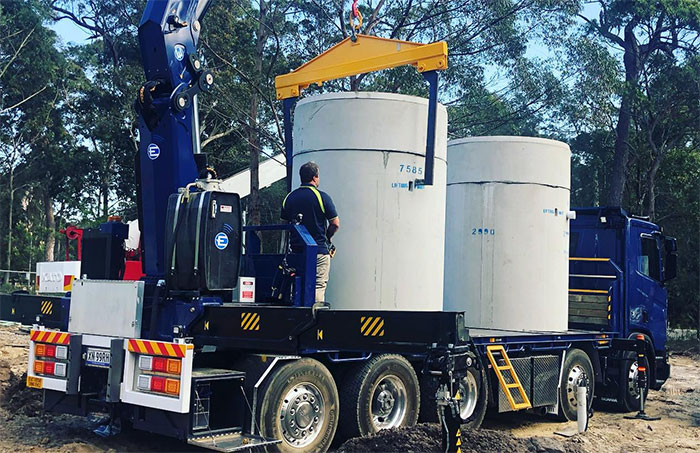
Recycling water in your home saves you money and is environmentally friendly

When considering the growing need to preserve water, there are a number of ways in which water can be recycled and reused around your home, these include recycling wastewater and recycling rainwater.

Recycling wastewater

Reusing household wastewater to water gardens or lawns can help save hundreds of litres of fresh water each day. Recycling wastewater for irrigation on single household properties has the potential to not only save significant amounts of drinking water, but also to save on the application of fertilisers to gardens and lawns, which ultimately saves you money.

The NSW Department of Health states that there are three types of household wastewater:

  1. Black water – this is wastewater that is generated from a toilet, it is heavily and directly contaminated with human waste.
  2. Grey water – this is wastewater which does not come from a toilet and includes wastewater from a hand basin, shower, laundry and kitchen.
  3. Sewage – this is a combination of both black water and grey water.

With proper treatment both grey water and black water can be put to good use. Grey water can be used as water in your laundry and for toilet flushing. Both treated grey water and black water are a great source of nutrients when irrigating your lawn and garden. It is important to note that recycled black water is not suitable for use with food producing plants.

Two major benefits of recycled wastewater are:

  • Reducing the need for fresh water. Saving on fresh water use can significantly reduce household water bills, but also has a broader community benefit in reducing demands on public water supply.
  • Reducing the amount of wastewater entering sewers or on-site treatment systems. Again, this can benefit the individual household, but also the broader community.

If you are considering recycling your household wastewater to reuse in your garden, you need an onsite domestic wastewater management system. These systems are required if your home is not connected to the town sewer line. Onsite single domestic wastewater management systems collect sewage or components such as grey water, where they are then fully treated for utilisation or reuse within the property boundaries.

One onsite domestic wastewater management system that will allow you to do this is an Aerated Wastewater Treatment System (AWTS). A BioSeptic AWTS treats household sewage (black water and grey water) and recycles it as treated effluent that can then be reused in your garden. Wastewater is treated and recycled to the property where it is produced, rather than moving the waste problem to a town sewage treatment plant. If you install a BioSeptic AWTS in your home, it means that you will pay for your water once and use it twice. It is an economical and environmentally solution.

An AWTS is just one onsite wastewater management system available. To find out what other options are available to you, click here and read about Aerated Wastewater Treatment Systems (AWTS).

For more information on how you can install an Aerated Wastewater Treatment System (AWTS) in your new or existing home, contact BioSeptic today on 1300 658 111.

Recycling rainwater

If you are connected to the town sewer line and don’t need an onsite sewage treatment system, there is a way for you to recycle and reuse water around your home too. You can collect and reuse rainwater by installing a rainwater tank. Rainwater collected by a rainwater tank can be connected to your outdoor taps and toilet cisterns. This will allow you to reuse rainwater to flush your toilets, wash your car or water your garden, where you would usually be using (and paying for) towns water. This will help you save money and be environmentally friendly. To find out more about the benefits of rainwater tanks, click here to read our “Benefits of water tanks for new homes” article.

A rainwater tank from Sydney Water Tanks is installed underground which gives you more space for recreation and leaves no tank in view.

For more information on how you can install rainwater tanks in your home, contact Sydney Water Tanks today on 1800 041 111.

Source: http://www.health.nsw.gov.au
Image source: http://sourceable.net/perth-takes-the-lead-in-water-recycling-and-efficiency/

Water Wise rules and water restrictions – what you can do around your home

Changing rainfall patterns and drought has meant Australians have become accustomed to living with water restrictions. Water restrictions are essential to ensure healthy and reliable water supplies now and into the future.


Restrictions will depend on how much rain has fallen in the water catchment near where you live, and on dam levels. Restrictions are usually seasonal, meaning you will probably be on a higher restriction stage in summer when there is little rain. Your state or territory may have permanent water saving measures in place throughout the year such as: set times to water your garden; not using tap water to wash driveways or paths; less efficient types of watering systems may be banned; and hand-held hoses may have to be fitted with trigger nozzles.


Water restriction levels are generally set by state and territory governments. In NSW, Sydney Water introduced the Water Wise Rules in June 2009 to replace drought restrictions. The Water Wise Rules are simple, common sense actions. It is your responsibility to make sure you are aware of the current restrictions that are in place and what you need to be doing.


The main Water Wise Rules:

  • Watering, including with sprinklers and irrigation systems, is allowed any day before 10 am and after 4 pm to avoid the heat of the day.
  • All hand held hoses must have a trigger nozzle.
  • No hosing of hard surfaces such as paths and driveways.
  • Washing vehicles is allowed.
  • Fire hoses may be used for fire fighting activities only.


What you can do around your home:

  • Wash your car on the lawn wherever possible. This will not only water and fertilise your lawn but will also avoid stormwater pollution.
  • Avoid any form of outdoor hosing between 10 am and 4 pm to avoid the heat of the day, when evaporation is high.
  • By installing a rainwater tank you can replace tap water with rainwater to water your garden. This will also help reduce your water bills.
  • Use a broom to clean up leaves, grass clippings, dirt, dust or general litter on paths or driveways instead of hosing.


Contact Sydney Water Tanks today on 1800 041 111 to find out about how an underground water tank can help you reuse rainwater and save you money!


For more information about the Water Wise rules visit Sydney Water: http://www.sydneywater.com.au/SW/water-the-environment/what-we-re-doing/water-restrictions/index.htm


For more information about water restrictions visit Living Greener: http://www.livinggreener.gov.au/water/water-in-the-home-and-garden/water-restrictions#washing_your_home_and_surrounds


Sources:

Living Greener: http://www.livinggreener.gov.au/water/water-in-the-home-and-garden/water-restrictions#water_for_a_pool_or_spa

Sydney Water: http://www.sydneywater.com.au/sw/findnow/index.htm?fn_url=http://sydneywater.custhelp.com/app/answers/detail/a_id/575


Water Wise rules and water restrictions – what you can do around your home

Changing rainfall patterns and drought has meant Australians have become accustomed to living with water restrictions. Water restrictions are essential to ensure healthy and reliable water supplies now and into the future.

Restrictions will depend on how much rain has fallen in the water catchment near where you live, and on dam levels. Restrictions are usually seasonal, meaning you will probably be on a higher restriction stage in summer when there is little rain. Your state or territory may have permanent water saving measures in place throughout the year such as: set times to water your garden; not using tap water to wash driveways or paths; less efficient types of watering systems may be banned; and hand-held hoses may have to be fitted with trigger nozzles.

Water restriction levels are generally set by state and territory governments. In NSW, Sydney Water introduced the Water Wise Rules in June 2009 to replace drought restrictions. The Water Wise Rules are simple, common sense actions. It is your responsibility to make sure you are aware of the current restrictions that are in place and what you need to be doing.

The main Water Wise Rules:

  • Watering, including with sprinklers and irrigation systems, is allowed any day before 10 am and after 4 pm to avoid the heat of the day.
  • All hand held hoses must have a trigger nozzle.
  • No hosing of hard surfaces such as paths and driveways.
  • Washing vehicles is allowed.
  • Fire hoses may be used for fire fighting activities only.

What you can do around your home:

  • Wash your car on the lawn wherever possible. This will not only water and fertilise your lawn but will also avoid stormwater pollution.
  • Avoid any form of outdoor hosing between 10 am and 4 pm to avoid the heat of the day, when evaporation is high.
  • By installing a rainwater tank you can replace tap water with rainwater to water your garden. This will also help reduce your water bills.
  • Use a broom to clean up leaves, grass clippings, dirt, dust or general litter on paths or driveways instead of hosing.

Contact Sydney Water Tanks today on 1800 041 111 to find out about how an underground water tank can help you reuse rainwater and save you money!

For more information about the Water Wise rules visit Sydney Water: http://www.sydneywater.com.au/SW/water-the-environment/what-we-re-doing/water-restrictions/index.htm

For more information about water restrictions visit Living Greener: http://www.livinggreener.gov.au/water/water-in-the-home-and-garden/water-restrictions#washing_your_home_and_surrounds

Sources:

Living Greener: http://www.livinggreener.gov.au/water/water-in-the-home-and-garden/water-restrictions#water_for_a_pool_or_spa

Sydney Water: http://www.sydneywater.com.au/sw/findnow/index.htm?fn_url=http://sydneywater.custhelp.com/app/answers/detail/a_id/575

Make the most of your rainwater tank this summer

If you own a water tank it is important for you to consider the ways you can maximise the rainwater in your tank to get the most from your water system.

Rainwater tanks generally require little maintenance; however there are a few things you can do to help gain the best benefit from your rainwater system:

  1. Regularly clear gutters and roof catchment – keeping them free of debris such as leaves , twigs and vermin
  2. Remove tree branches overhanging on your roof
  3. Check any protective mesh regularly and replace them if damaged – to prevent algae from forming and mosquitoes breeding
  4. Ensure that overflows from air conditioners or hot water systems don’t discharge into the overflow area of your rainwater tank
  5. Tanks should be examined for accumulation of sludge at least every 2-3 years

To ensure you are maximising the use of water available from your rainwater tank, ensure that you use your rainwater tank for the following:

  • Watering your garden and lawn – during warm weather, this is best in the morning or evening
  • Washing your car
  • Filling your swimming pool, spas, ornamental ponds or water features
  • Connect your tank to your toilets and laundry, so tank water is used to flush toilets and wash your clothes, rather than mains water

This way, not only are you are saving money but also helping to preserve the environment.

How to beat the heat in your home this summer

As the temperature rises, so does the temptation to crank up the air conditioner. But there are ways to reduce the summer heat in your home before resorting to mechanical cooling.

Direct sunlight on windows can produce as much heat as a radiator, so shade exterior windows (especially north and west-facing ones) with blinds and curtains inside, and awnings or pergolas outside. Deciduous trees, bushes or vines outside windows and walls will also provide heat protection in summer.

Close windows and curtains during the hottest part of the day to keep out heat and save on cooling costs. When it cools down outside open your home up to the evening breeze. This will lower the temperature inside. Create airflow by opening windows or doors on opposite sides of the room.

If you haven’t already insulated your home, you could be wasting up to half the energy you use to cool your home by allowing cool air to leak out and hot air to enter. And don’t forget to draught-proof your home by sealing gaps around windows and doors—this helps keep cool air in and hot air out. Weather strips are a cheap and easy option. Check out gift shops for some funky new versions of the traditional sand-filled ‘sausage’.

Electrical appliances and lighting can pump out heat too, so turn off lights, computers and televisions when not in use and try to use the dishwasher or washing machine in the morning or evening when it’s cooler. Avoid using the oven in the middle of the day. Even your choice of light globes can make a difference to the heat in a room. Compact fluorescent lamps (CFLs) not only emit less heat than older-style light globes, they are far more energy efficient and can last 4 to 10 times longer.

If you decide to use electrical cooling, consider using fans. They use a fraction of the energy an air-conditioning system uses and create a breeze to make you feel cooler. Remember, fans cool people, not rooms, so turn them off when you leave the room.

If you have an air conditioner, use it only when you have to and don’t over-cool. Set the temperature between 25 and 27 degrees Celsius. Setting the thermostat to even one degree higher can save between 5 and 10 per cent on your energy use. Consider buying a programmable thermostat for your air conditioner so that you can set it to suit your schedule and needs. If your air conditioner has a component such as a compressor that sits outside, try to provide it with some shading—if it’s sitting in full sun it has to work harder than it needs to. You might be able to use shading plants or an awning over a window. Don’t forget to clean the filters regularly to help your system work more efficiently.

Hopefully these tips will help you beat this heat this summer! If find these tips helpful, why don’t you share this article?

This article was first published on LivingGreener.gov.au and reposted on www.sydneywatertanks.com.au and www.bioseptic.com.au

New Year’s Resolution: help preserve water around your home

Start the year off with the plan to be more water wise around your home. By doing this, you will help to preserve water and do your part in helping to sustain this valuable resource. With the rise in living costs, population growth and pollution, the need to conserve water now has never been more important. You can play an active role and make informed choices that will help to make a difference to our environment.


Here are some tips on how you can save water around your home and garden:

  • In your garden, water your plants early in the morning or evening. When washing your car, use a bucket of water and park it on your lawn. Adding compost to your garden beds will help increase the amount of water available to your plants.
  • In your home, install water efficient devices and regularly check for leaking taps and pipes. When washing fruit and vegetables, half fill a sink to wash it rather than under running water. Make sure you don’t leave the tap running when you brush your teeth.
  • Install a rainwater tank as an additional water source for your home and garden.


Being water wise is easy if you know how and what to do. The benefits of saving water include saving money and protecting our precious environment, so make water conservation your New Year’s Resolution!


What do you do around the house and garden to help save water? We’re always open to new ideas!

The Martins Group Christmas trading hours

The team at The Martins Group would like to thank you for your support over the past year and wish you a safe and happy festive season.


Our office will be closed from 12pm Friday 20th December and reopen on Monday 6th January.


Our service paging line – 02 4629 6633 – will be available during the festive season.

The summer of living greener


When the mercury’s rising and summer’s in full swing it’s the season to cook outdoors, camp under the stars, and drive off into the sunset for a bit of time out.


It’s also the season when water usage, electricity and fuel bills can soar as we try to keep cool, keep the garden alive, and travel about in holiday mode. But with some thought and a bit of planning, the impact of summer living can be kept at bay.


Living Greener has provided some helpful tips and guidelines on how to keep your garden green this summer.

Creating a greener garden

Gardens can really suffer in the summer heat, especially if you live in an area with dry conditions or where water restrictions are in place. By creating a water-smart garden, you can reduce labour, save water and help your garden to flourish under dry conditions. To find if you have a water-smart garden or to read about what you can do to have a water-smart garden in your home click here.


Mulching is one of the most efficient ways to maintain your garden through summer. It helps smother weeds and reduces moisture loss. There are lots of mulches to choose from such as pea straw, sugar cane and wood chip. Don’t water mulched gardens too often as this brings roots to the surface.


Water efficiently. Work out which plants do well in which spot and group plants together according to their need for water and sun —this way your intense watering can be confined to one spot. Only water the plants that need it and do it early in the morning or in the evening. Water deeply — a good occasional soaking is better than several light sprinkles, and water slowly to ensure good penetration. Adhere to water restrictions in your area.


Get to know your soil and what you can do to keep it fertile and improve its water retention. Talk to your garden centre about ways to test your soil, or research online — this will help you to know what your plants need to thrive.


Improve the health of your soil. Make your own organic mulch by starting a compost heap or keeping worms — the new age pets. Composting your kitchen and garden waste or keeping chickens will also prevent food scraps and garden waste from rotting in landfill and releasing greenhouse gases.


A greywater system is a good way to re-use water from the bathroom basin or laundry and redirect it to your garden. There are a few types of greywater systems. Consult your plumber and local council about regulations and options in your area. Rainwater tanks are a popular way to harvest water. Click here to read about the benefits of installing a rainwater tank in your home. If you’ve already thought about installing a rainwater tank in your home but you’re not quite sure where to start, read this article to help you determine which size rainwater tank you need in your home. If you have any other questions about rainwater tanks, call us on 1800 041 111 and we will be happy to help you.


There’s a range of rebates and assistance available to assist with planning and establishing a water-smart garden. You can also talk to your local nursery or garden centre about the most effective way to care for your garden in summer. You can visit http://www.livinggreener.gov.au/rebates-assistance to find out what rebates are available to you.

Lawn maintenance


Lawns can make gardens look great and feel cool under bare feet, but the reality is they’re thirsty drinkers and require quite a bit of maintenance. But with a bit of care, you can keep your lawn healthy in the heat and minimise its water needs — or consider some alternatives.


Summer often gives lawns a beating, especially in drier areas and if water restrictions apply. Don’t despair if they turn a bit yellow or brown — this usually means that your grass is just dormant and will return to green when the weather cools down and rainfall increases.


It’s important not to cut your grass too short. Longer blades of grass are less stressed and provide shade to keep the soil moist and overtake weeds.


Over time the soil in lawns becomes compacted and needs to be aerated —this will allow water to be absorbed more effectively. You can use a garden fork for smaller areas (press a fork into the soil and lever it back and forth a couple of times) or hire a coring machine for larger areas. Wetting agents may also help lawns absorb water if they’ve become dried out.


Over-fertilisation with chemicals makes the soil too acidic for the lawn and pollutes our waterways. You can make up a batch of organic fertiliser by combining equal amounts of ‘blood and bone’, ground chicken manure and river sand and sprinkle it onto your lawn two or three times each year.


Mowing, leaf blowing, fertiliser production and other lawn-tending activities can produce more greenhouse gases than your lawn can absorb. Try switching to a push mower and garden rake —this will reduce carbon emissions and keep you fit at the same time.


Talk to a lawn expert about suitable grass choices for your area and the best way to care for lawns and minimise water use. They will also be able to advise you on other ways to help keep lawns healthy.


You can also talk to garden and landscape experts about alternatives to replace or reduce lawn areas, such as drought-tolerant flowering plants, ornamental grasses or tan bark. There are also porous paving options which prevent water run-off from paved areas.

This article was first published on LivingGreener.gov.au and reposted on www.sydneywatertanks.com.au/archive and www.bioseptic.com.au 

Eco ideas for lawns and landscaping


Spending time outdoors is an essential aspect of the Australian way of life. Homeowners are showing more interest in taking care of and utilising their backyard so they are getting the most use out of it. By following a few of these tips related to your lawn and landscaping, you can save energy, water and money all while enjoying a beautiful backyard.


Lawns and landscaping—water and energy smart design
Lawns are responsible for up to 90 per cent of the water used in the average garden. Designing your garden to withstand times of low rainfall, including reducing lawn areas, can bring a range of benefits. Minimising the need for maintenance, water and other resources with a water smart garden means you’ll have more time to sit back and enjoy your oasis. Things to consider include:

  • Replacing lawn areas with easy to maintain renewable woodchips. Identify lawn areas you currently don’t use and turn these into garden beds. Besides saving on water use, other benefits sure to please include easy maintenance, and no more noise and air pollution from all the equipment required for trimming, edging and cutting. Your family and neighbours wanting to have a weekend sleep-in will love you for it.
  • Planting native species. Fill your newly mulched and chipped area with water-efficient, low maintenance, local native species that will attract birds and wildlife. As you look out on your new habitat, think of all the time and resources saved on mowing, watering, weeding or fertilising.
  • Measuring up. If you do want a lawn area, plan for the size you need for household activities, and consider planting drought-tolerant and native varieties that will require less water.
  • Reducing the amount of water your lawn and garden needs. Setting your mower to cut at 4 centimetres or higher provides greater protection for soil so it doesn’t dry out as quickly. Water your lawn deeply and infrequently instead of lightly and often to encourage a deeper root system and better water retention.
  • Reducing the need for heating and cooling. Well selected trees and shrubs can help reduce your heating and cooling bills. Plant shade trees that will keep the summer sun out and let the winter sun in to your home.
  • Selecting the right pump. Reduce the environmental impact and running costs of decorative ponds and fountains by choosing a solar pump and keeping your water clean and healthy at the same time.
  • Choosing equipment wisely. Consider our tips on choosing and using a mower, leaf blower and other lawn equipment so you can reduce your lawn’s environmental impact and save time and money too.


When watering your garden, save money by installing a rainwater tank as the main source of water for your garden. A water tank from Sydney Water Tanks is installed underground so it won’t take up your valuable yard space. Water from a Sydney Water tank is also better for your lawn as it chemically untreated and completely natural. To find out more, call Sydney Water Tanks on 1800 041 111.


This article was first published on LivingGreener.gov.au and reposted on www.sydneywatertanks.com.au/archive and www.bioseptic.com.au

Water restrictions – what you need to be aware of

An important responsibility of individuals and businesses is ensuring that water restriction rules are adhered to, in order to help protect and preserve this precious resource. If these rules are not followed individuals and businesses can face fines if the rules are breached.

Sydney Water provides the following guidelines which apply to those living in Sydney, the Blue Mountains and Illawarra.

The rules

Watering your garden, you can:

  • water with hoses fitted with a trigger nozzle, sprinklers and irrigation systems any day before 10 am and after 4 pm
  • use a bucket or watering can to water lawns and gardens at any time
  • establish new lawn using your sprinkler or watering system at any time of day for 14 days after you’ve laid the turf
  • use water from your rainwater tank, as long as it’s not connected to or topped up with drinking water.


Looking after your pool and keeping cool, you can:

  • fill or top up your swimming pool
  • use water to cool people or animals.


Cleaning, you can:

  • use a bucket, watering can or a hose fitted with a trigger nozzle to wash vehicles
  • clean your bin using a hose fitted with a trigger nozzle. Where possible, wash your bin in an official bin wash area or on grass
  • hose paths, driveways, concrete or other paved surfaces for health, safety, emergency, construction or surface discoloration reasons. You must be able to give a legitimate reason to one of our authorised staff members if you’re asked
  • use a hose to flush your boat engine
  • use a hose with a trigger nozzle or high pressure cleaning device to clean your boat bilges, boat trailer brakes and wheels.


Fire fighting, you can:

  • use a fire hose for fire fighting activities.

Exemptions
Recycled water, bore water, water used to test fire systems and water used for fire fighting are exempt from Water Wise Rules.


Water from rainwater tanks is also exempt if it is not topped up from our water supply.


Some government restrictions apply to bore water and water extracted from rivers, so always check with your local council or the NSW Office of Water.

Install a rainwater tank to use in your home and garden

Installing a rainwater tank in your home is an environmentally friendly and cost effective way to collect water to use in your garden. A rainwater tank from Sydney Water Tanks can also be connected to your toilet cistern which will save approximately 50,000L of town water per year from being flushed down the drain.


Call Sydney Water Tanks today on 1800 041 111 to find out more.